Launching a whiteboard-first video experience in 4 months
45%
adoption rate
100+ users acquired
right after the MVP launch
End-to-end design leadership
defining the core workflow and brand identity
DOMAIN
Productivity, Collaboration
YEAR
2022
MY ROLE
UX/UI Designer
TEAM
PM, PO, 4 x Developers
Challenge
Tools built before remote
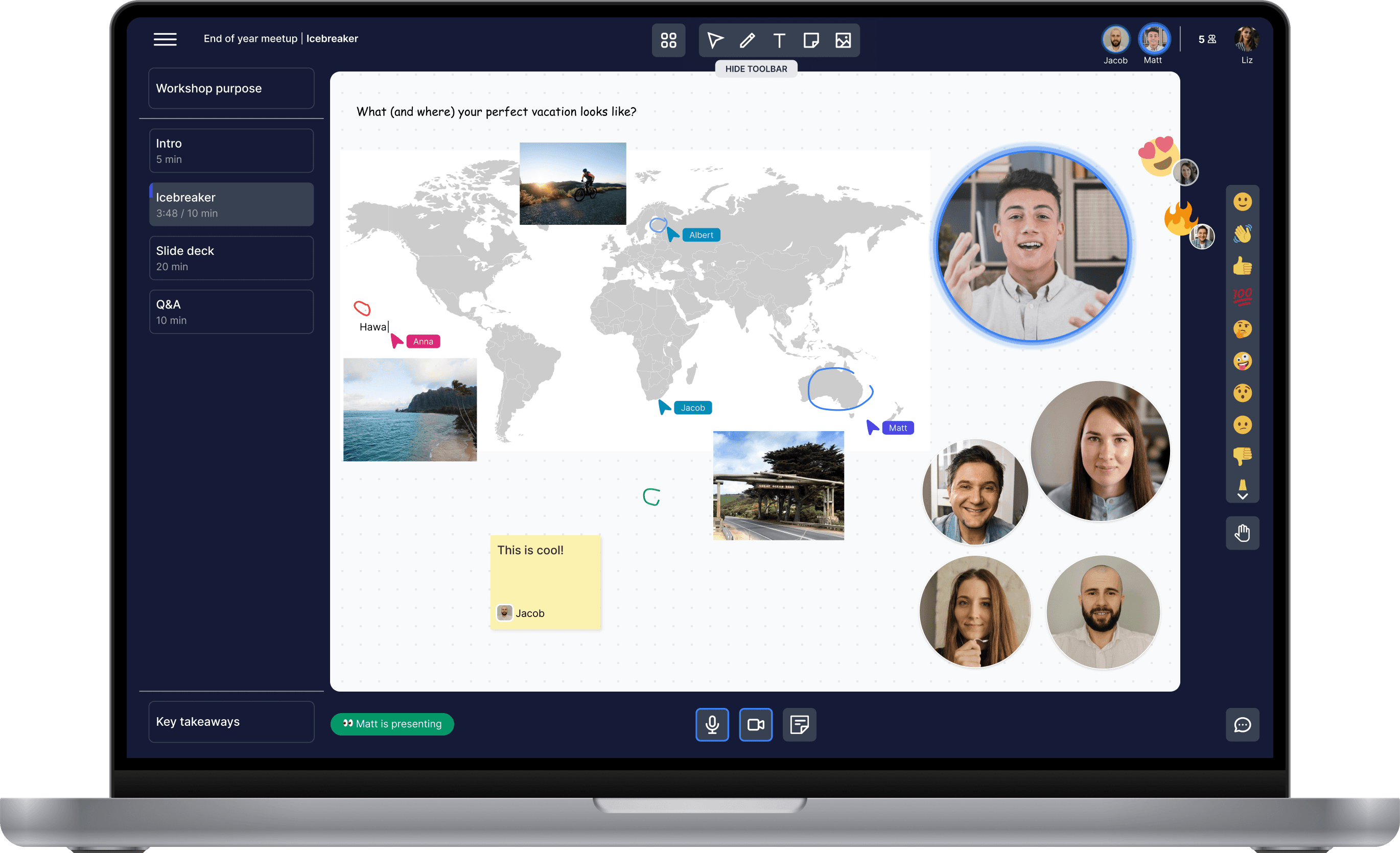
The idea of Skechy was born during the pandemic. During the lockdown, people needed software that focused on micro-interactions to replicate the dynamics of physical meetings. No such application perfectly combined collaboration and video conferencing, as the tools were built beforehand and adopted only when remote work was required.
There was little room for remote collaboration, leading to the rise of screen sharing as a primary collaboration tool. With multiple tools required for remote collaboration within distributed teams, and the focus on video over content, the idea of a multi-purpose, lightweight tool built to reduce cognitive load came to life.
Approach
Validation
Just because the video conferencing tools were appearing like mushrooms after the rain doesn’t necessarily mean it’s the right thing to do. I wanted to know the difficulties and the true reasons behind the online meeting disengagement.
We didn’t have any users yet, so I developed relationships with professional facilitators, coaches, and people who conduct online workshops, meetings, and webinars. Close connections and word of mouth were the best approaches for surveying and interviewing 100+ people.
67%
have experienced disengagement during meetings
77%
have experienced difficulties facilitating workshops, especially while juggling different tools
59%
said that digital tools are difficult to use and it takes time to learn
Design principles
Before designing the interface, I spoke to facilitators to determine how the platform should function. Two guiding principles emerged from my conversations:
Collaborative & engaging: Have a digital body language in the platform to keep the fun and engagement.
Flexibility: Let users conduct more structured workshops by adjusting the tool to whatever activity and need the meeting has.
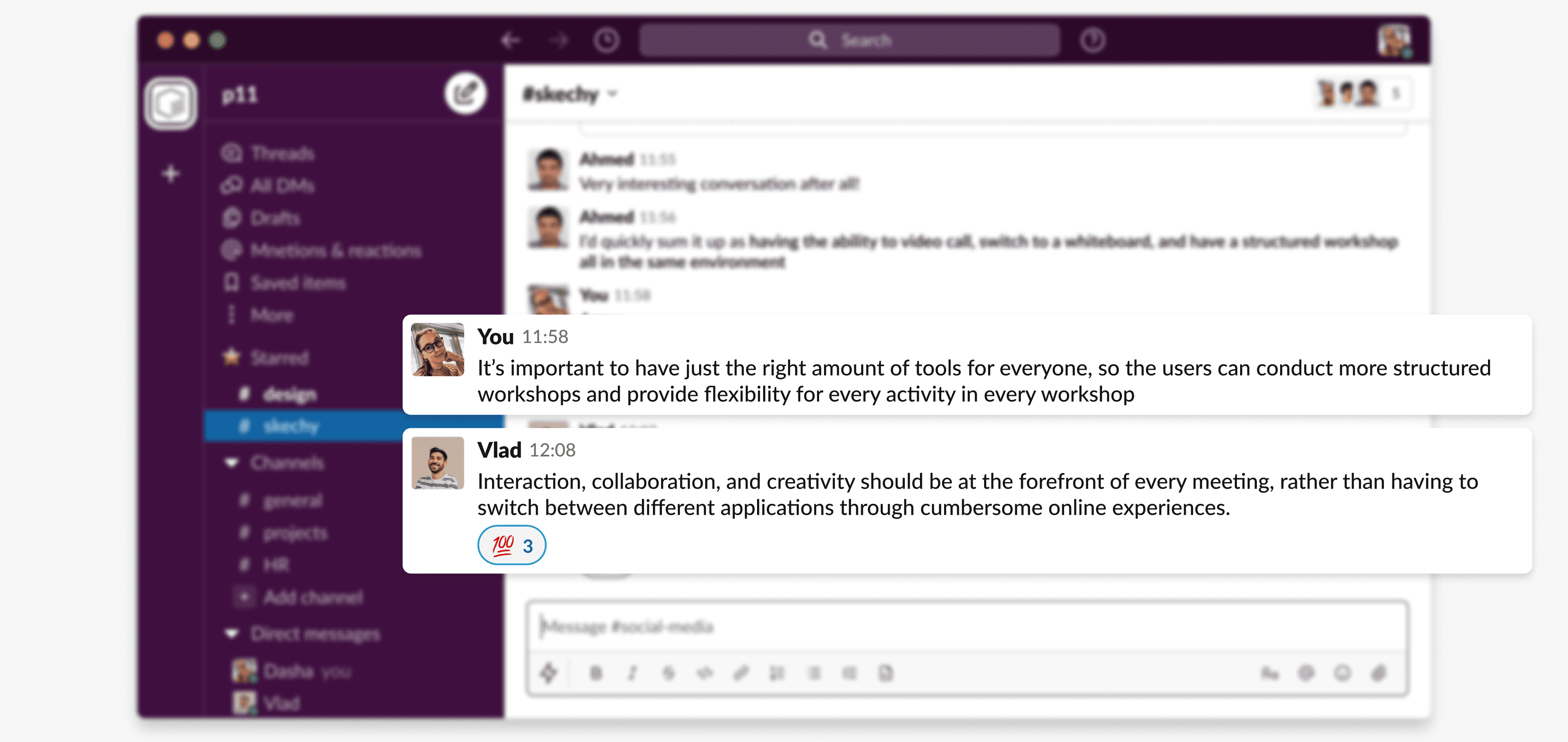
The project goals' birth
Product design
Widgets experience
The initial whiteboard concept evolved into a widget-based system for creating activities, forming the foundation of the collaborative tool. Based on research into common workshop activities, we selected and designed 10+ widgets, keeping interaction, collaboration, and creativity central to every session.
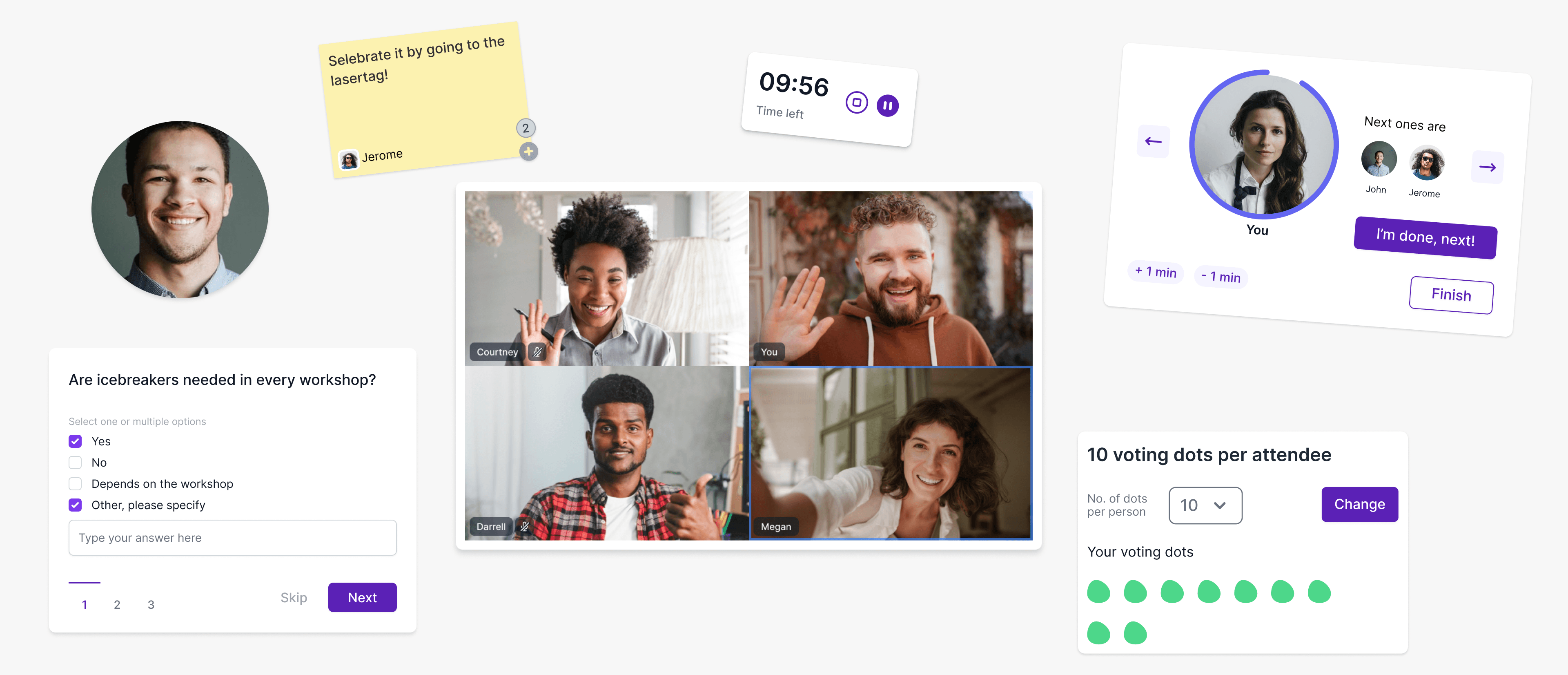
A few of our most popular widgets
Concept 1: The initial
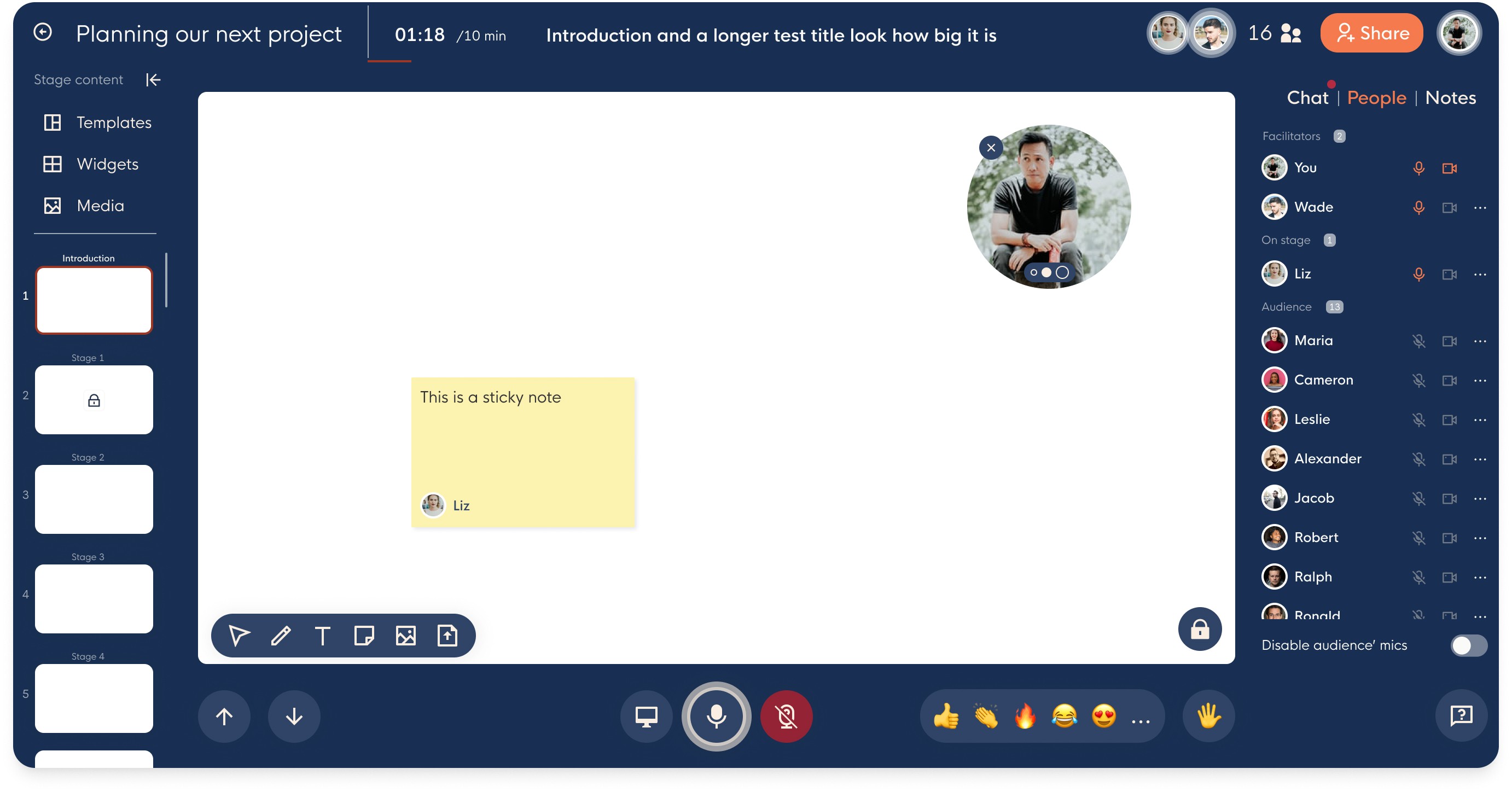
After using this version for a while, we realized a few things were not working well:
✘ The people list needs to emphasize people and their engagement more
✘ The Agenda wasn’t informative enough
✘ Templates, widgets, & media (users didn’t understand where these elements relate to)
Concept 2: Defocused
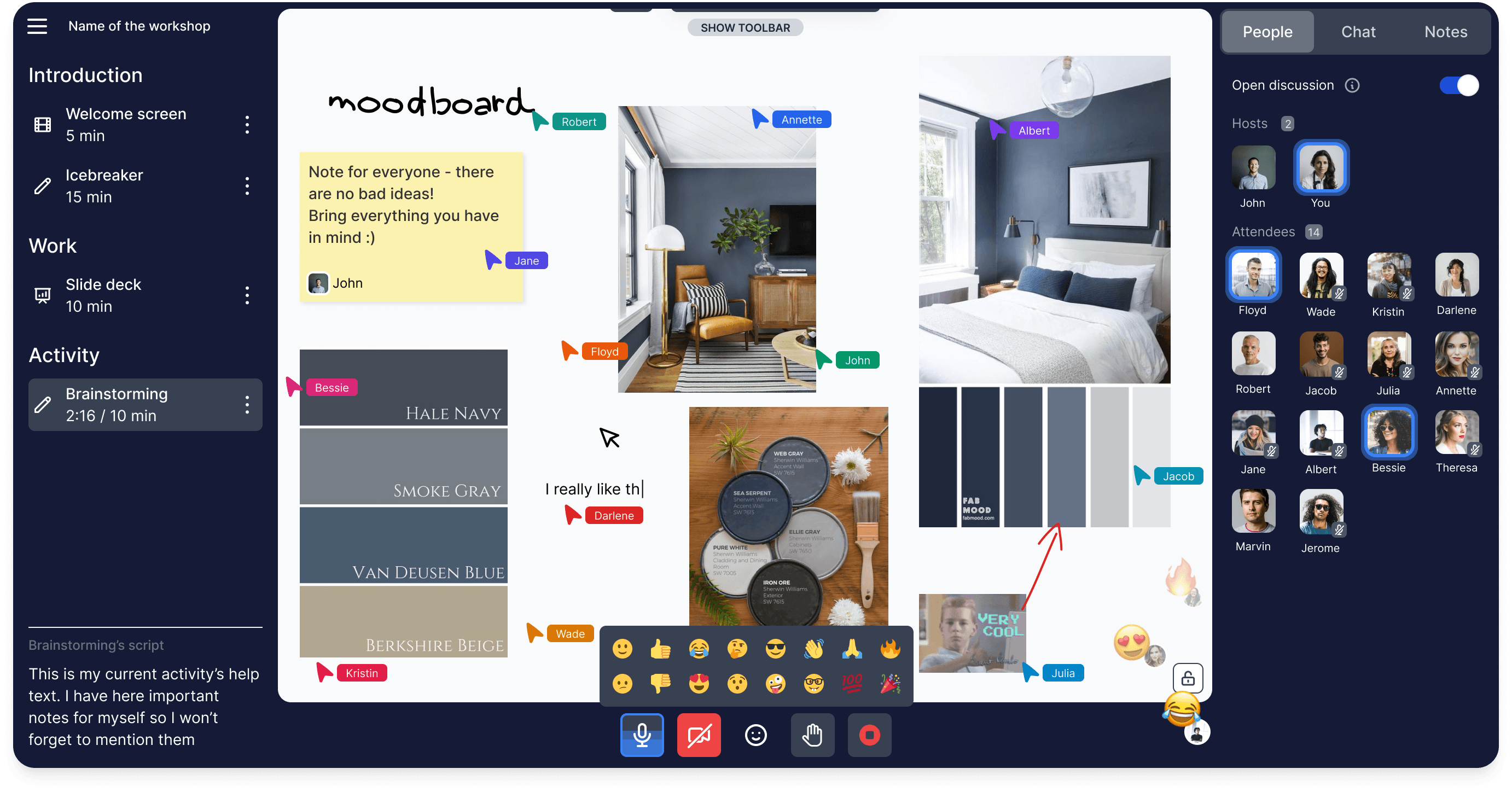
Additionally, we added new features in the next version, including a speaker script and presentation mode. We also further developed the visual identity by leaning more into dark mode to keep the focus on the whiteboard content.
As our early adopters and we started using this version, we identified several areas that still needed improvement:
✘ The whiteboard felt too constrained and needed more space
✘ Reactions were used less after being hidden behind a button
✘ The people list drew too much attention away from the content
✘ The toolbar was hard to reach
✘ The notes tab didn’t feel useful in its current form
Concept 3: Balanced
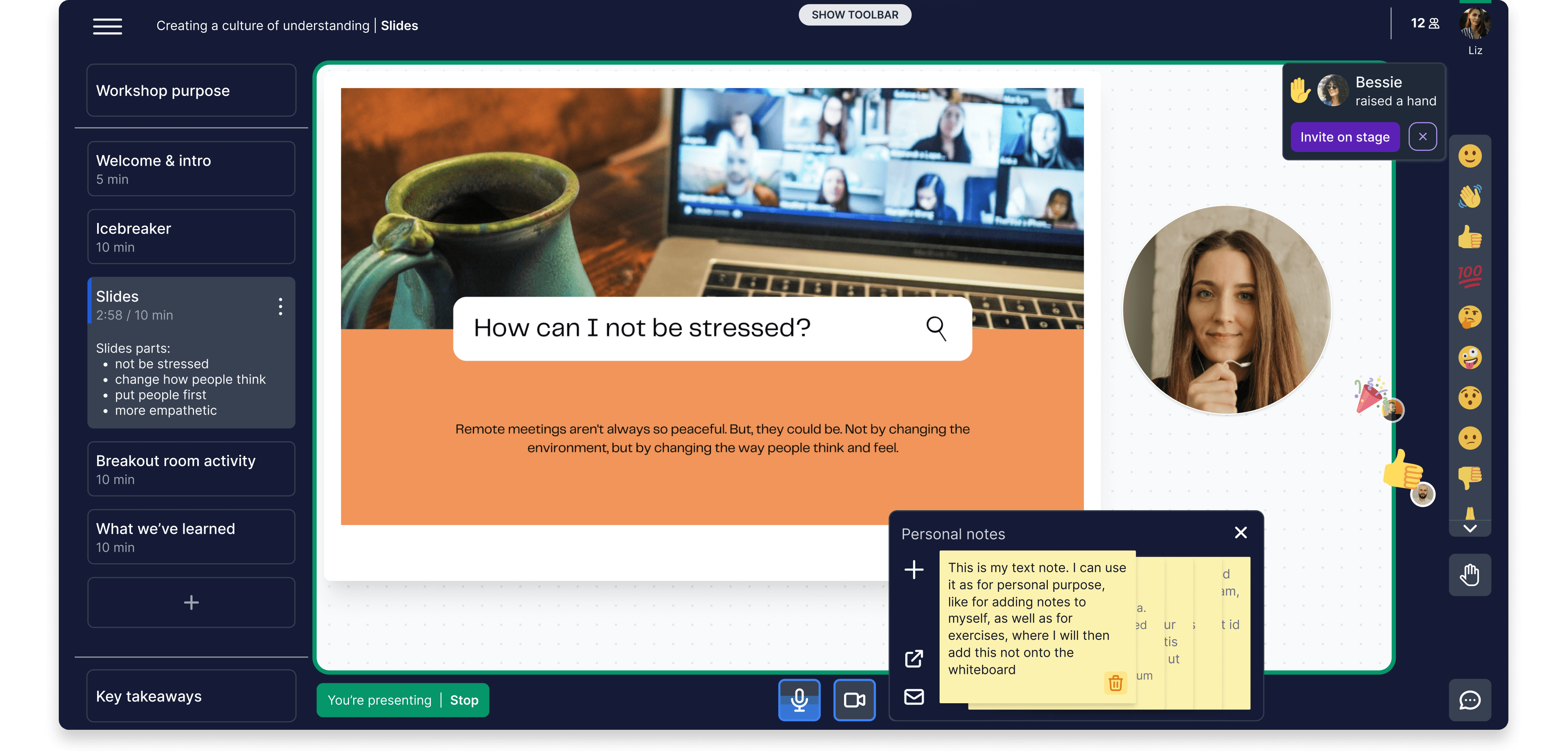
This is the direction we ultimately selected because it balances whiteboard space with tool availability, ensuring critical tools are always within reach while less-used features stay out of focus.
Speed for efficiency: the project template library
To reduce blank-canvas anxiety and help users create effective workshops faster, we introduced a curated library of prebuilt activity templates. This allowed users to start with proven structures instead of setting everything up from scratch, making the product valuable from the very first session.
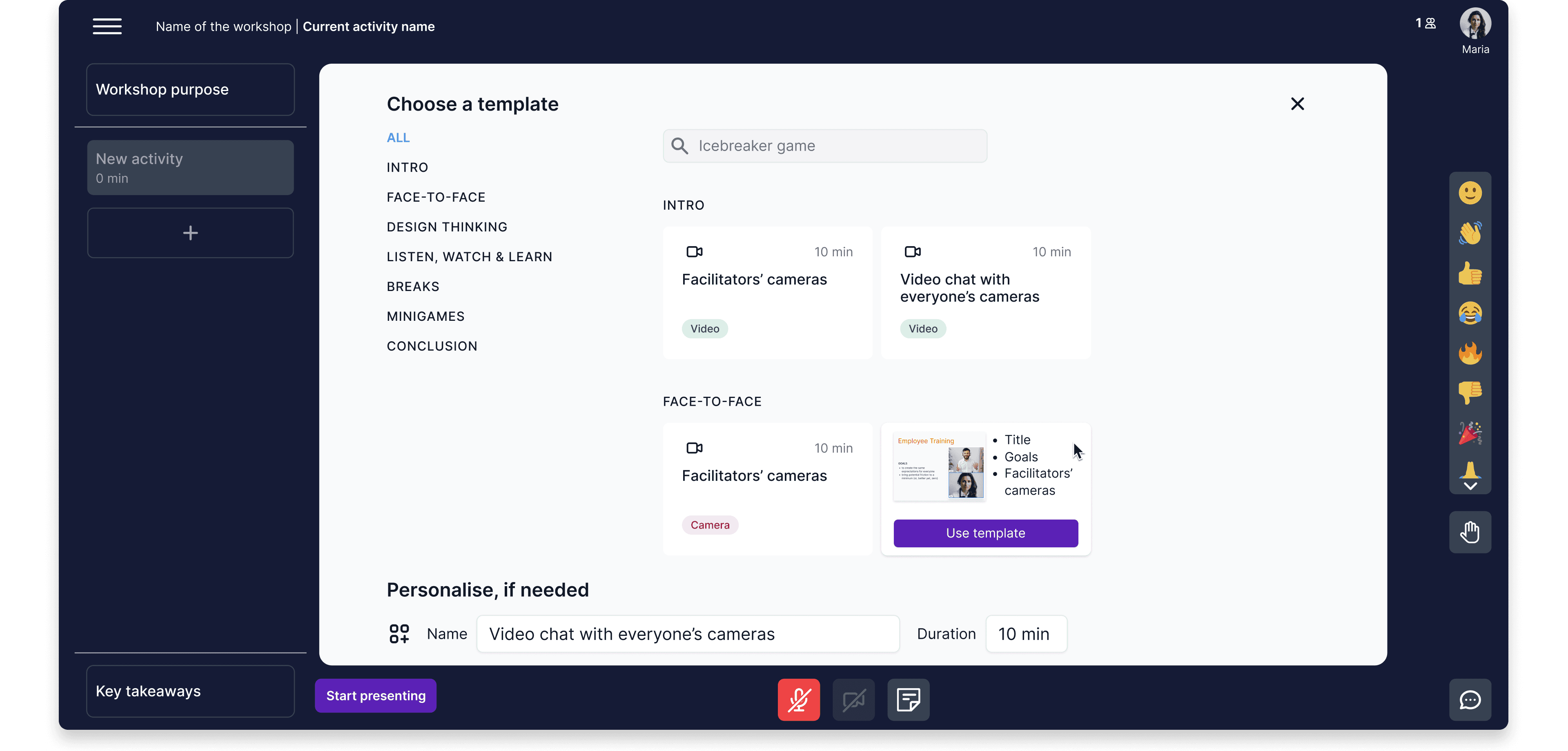
Library of prebuilt activity templates
Flexibility for any purpose
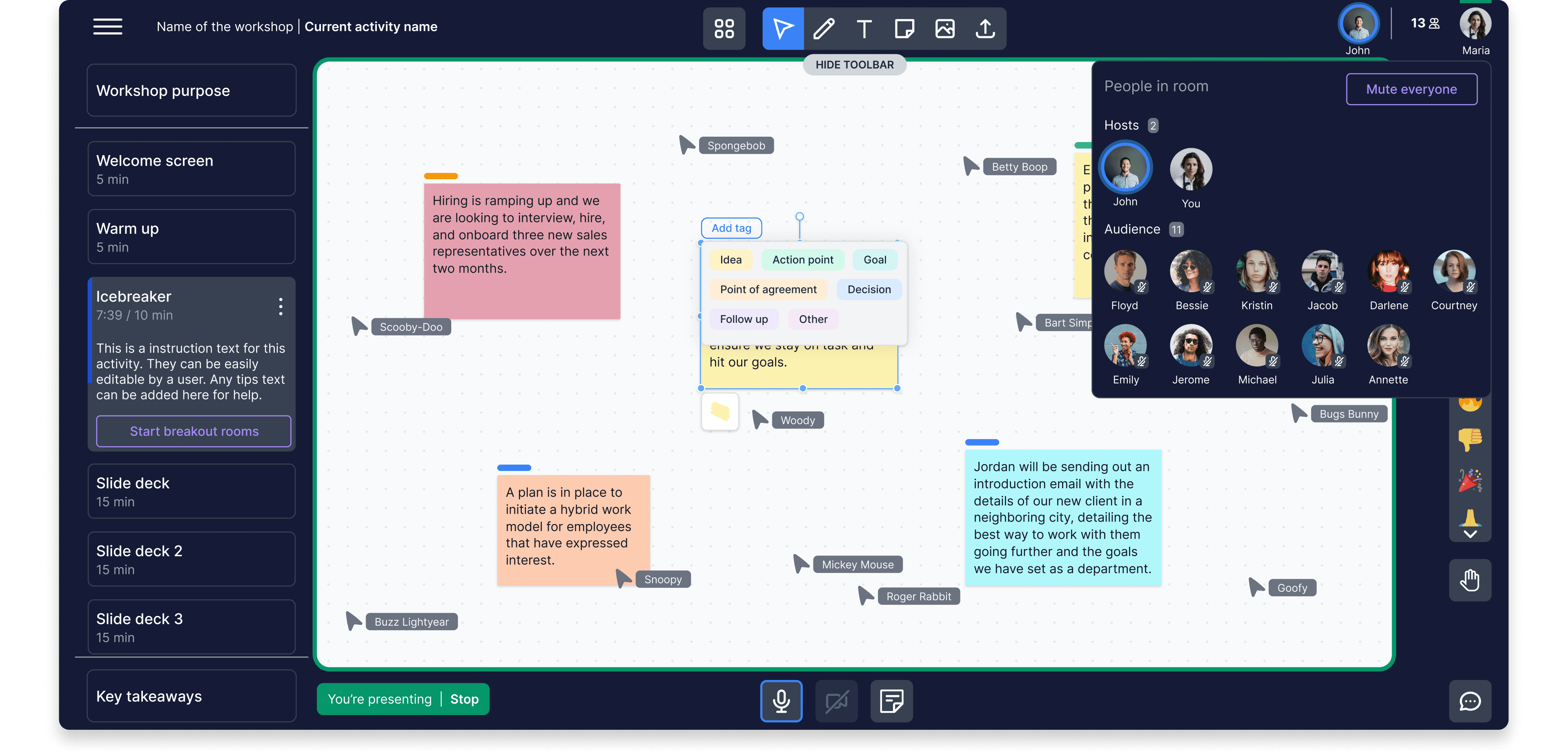
Group activity with sticky notes
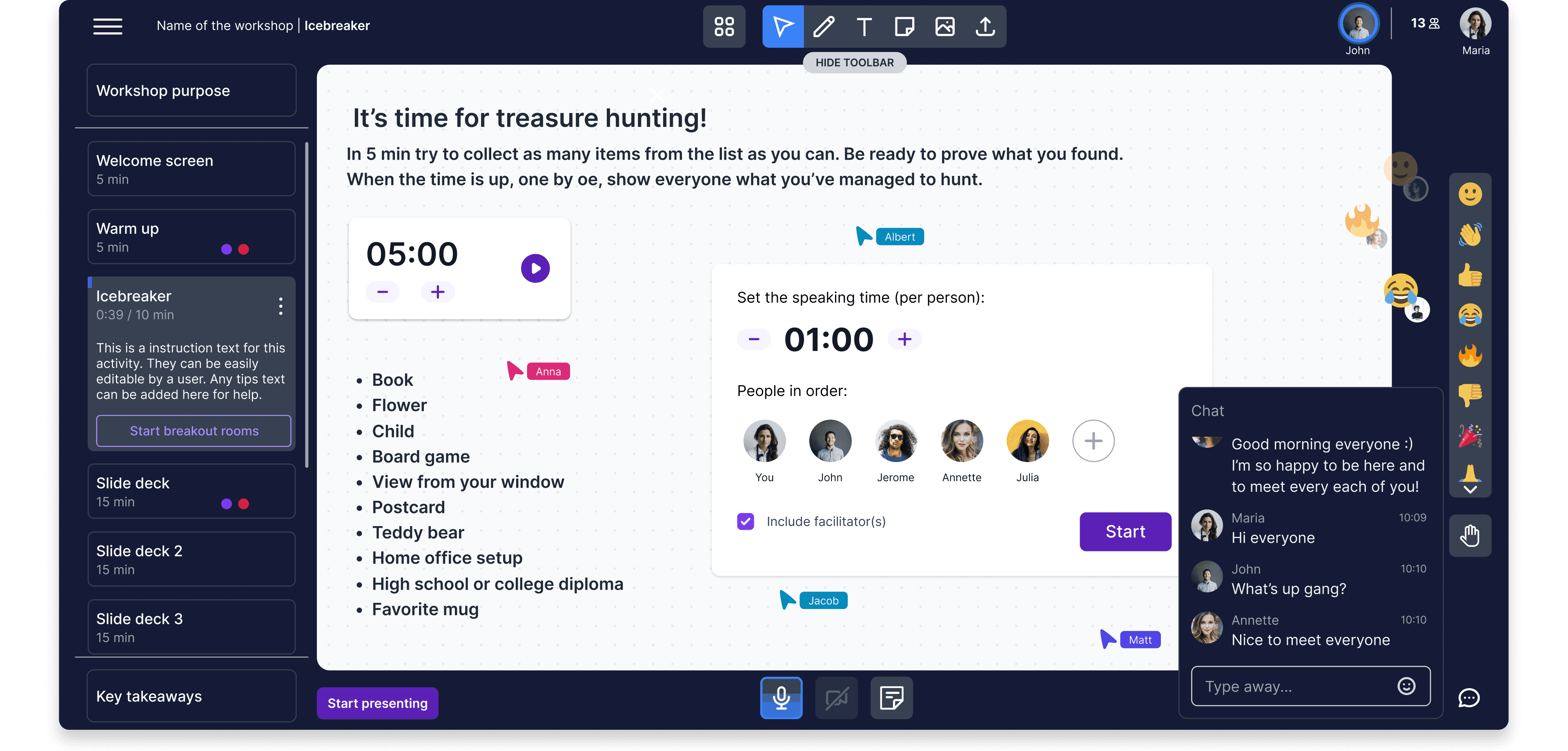
Treasure hunting icebreaker
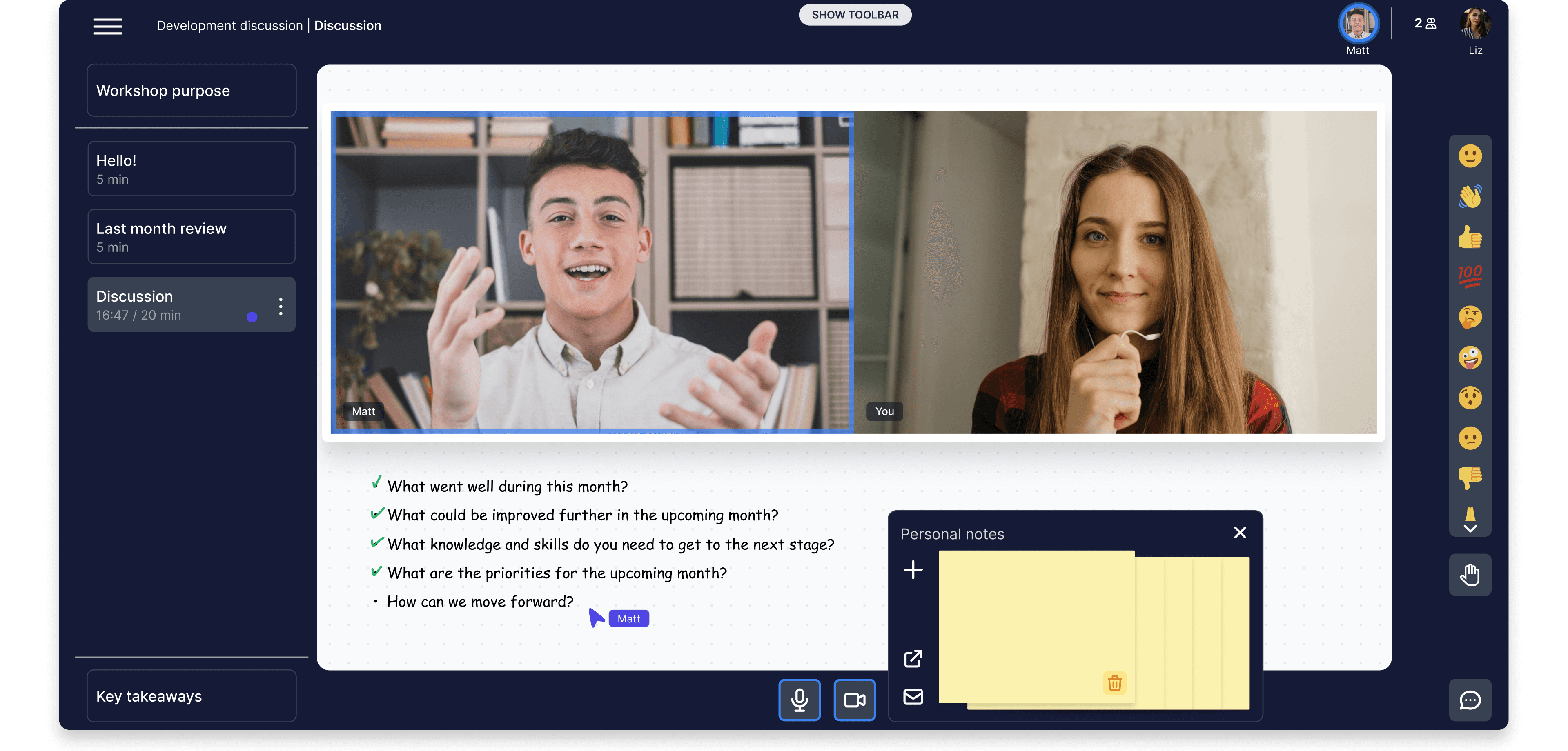
One-on-one discussion
Results
🥇
First-to-market
Launched a first-of-its-kind, whiteboard-first collaboration and video conferencing product, rethinking meetings around shared work instead of calls. Built and shipped the MVP in 4 months, achieving a 45% adoption rate.
🤝🏻
New partnerships
Unlocked new partnerships with the professional facilitator community, who adopted the product in their own work and actively promoted it. These partnerships also became a key feedback loop, helping us improve and scale the product further.
Dasha has a natural ability to present her design rationale clearly and was always a positive force on our team. What stood out to me was her complete ownership of the design process: she's not just there for the final UI, but for the entire journey.

Vlad Bondarenko
CTO, Perspektives
Dasha is an excellent UI/UX and product designer. She combines competence with deep knowledge of the product domain and conducts research when needed.

Kirill Chuprov
Engineering Team Lead, Perspektives